WhatsApp Broadcast Automation
Businesses today need fast, reliable, and automated communication to stay competitive. Manual messaging is time-consuming and difficult to scale, especially when customer bases grow. This is where WhatsApp broadcast automation plays a crucial role. It allows businesses to send personalized messages to large audiences automatically while maintaining a one-to-one chat experience.
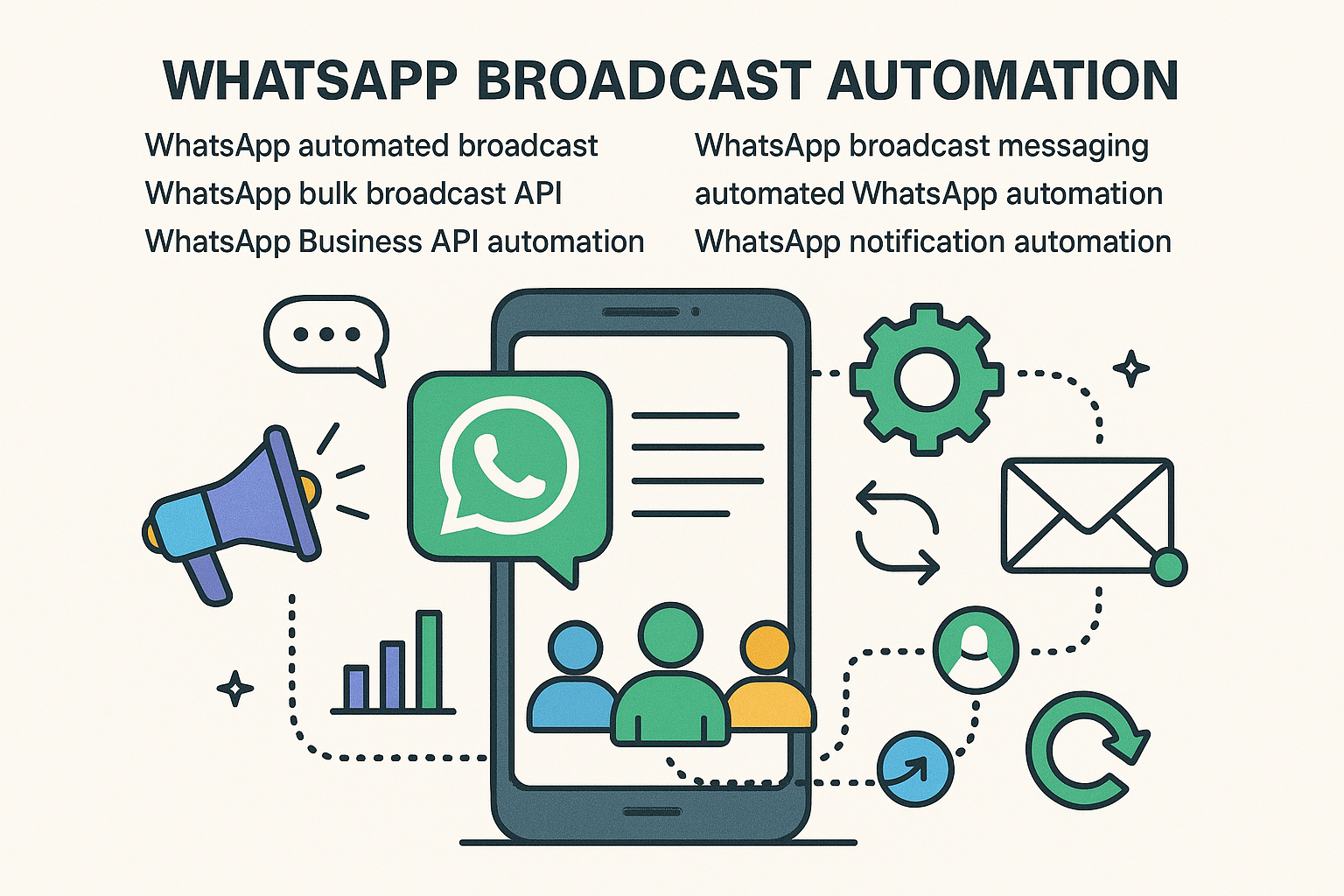
WhatsApp Broadcast Automation: The Smart Way to Scale Customer Communication
Businesses today need fast, reliable, and automated communication to stay competitive. Manual messaging is time-consuming and difficult to scale, especially when customer bases grow. This is where WhatsApp broadcast automation plays a crucial role. It allows businesses to send personalized messages to large audiences automatically while maintaining a one-to-one chat experience.
In this article, we’ll explore what WhatsApp broadcast automation is, how it works, and why it has become essential for modern businesses.
What is WhatsApp Broadcast Automation?
WhatsApp broadcast automation is the process of sending messages to multiple users simultaneously using automated workflows and official WhatsApp Business API. Unlike traditional broadcasts on the WhatsApp app, automation allows businesses to manage large contact lists, schedule messages, personalize content, and track performance—all from a single dashboard.
Messages can include:
-
Promotional offers
Order and payment updates
Appointment reminders
Event notifications
Product announcements
With automation, businesses can deliver timely and consistent messages without manual effort.
Why Businesses Need WhatsApp Broadcast Automation
Customer expectations have changed. People want instant updates and personalized communication. WhatsApp broadcast automation helps businesses meet these expectations efficiently.
Key benefits include:
-
Time Savings – Automated broadcasts eliminate repetitive manual tasks
Higher Engagement – WhatsApp messages have higher open rates than email or SMS
Personalization at Scale – Use customer names, order details, or preferences
Improved Conversions – Timely messages lead to faster responses and actions
Operational Efficiency – Sales, marketing, and support teams work smarter
Industries such as e-commerce, healthcare, education, real estate, and financial services actively use broadcast automation to communicate with customers.
How WhatsApp Broadcast Automation Works
The automation process usually involves the following steps:
-
Choose an Official WhatsApp API Provider
To ensure message delivery and compliance, businesses should use Meta-approved platforms like SyncWaba that offer scalable WhatsApp automation solutions. -
Upload and Manage Contact Lists
Contacts are segmented based on criteria such as location, purchase history, or behavior. -
Create Approved Message Templates
WhatsApp requires templates for outbound messages. These templates are pre-approved and reused for automation. -
Set Automation Rules and Triggers
Messages can be triggered based on time, customer action, or CRM updates. -
Monitor Performance and Responses
Delivery reports, read receipts, and responses are tracked for optimization.
WhatsApp Broadcast Automation vs Manual Broadcasting
Many businesses rely on manual WhatsApp broadcasts, which have strict limits and lack tracking features. Automated broadcasting offers clear advantages:
-
No contact limit issues
-
Reduced risk of number blocking
-
Detailed analytics and reporting
-
Seamless CRM and system integration
-
Better compliance with WhatsApp policies
Automation ensures long-term, professional communication without disruptions.
Best Practices for WhatsApp Broadcast Automation
To get the best results from automated broadcasts:
-
Always collect customer consent (opt-in)
Avoid sending too many messages
Personalize content for better engagement
Use clear call-to-action buttons
Analyze campaign performance regularly
Following these practices helps build trust and improve customer retention.
Common Use Cases
Businesses use WhatsApp broadcast automation for:
-
Flash sale announcements
Payment reminders
Order status updates
Course or event notifications
Customer feedback collection
Each use case improves communication speed and consistency.
Final Thoughts
WhatsApp broadcast automation is no longer optional—it’s a necessity for businesses that want to scale communication without increasing workload. It combines automation, personalization, and real-time engagement in one powerful channel.
By using a reliable solution like SyncWaba, businesses can automate broadcasts securely, stay compliant, and deliver meaningful customer experiences at scale.
Tags:
Ready to Get Started with WhatsApp Business API?
Join 1,000+ businesses using SyncWABA to grow with WhatsApp. Start free today!